
Hosting fire, visiting water
by Rowan
On a Wednesday afternoon during the last week of term, I received a message on WhatsApp. It made my heart feel warm inside, like the light of an ember gently glowing. It was a message from Leonardo, one of the first cohort of children at Free We Grow who was with us from 2017-2021, aged 7-11.
“Hey Rowan, basically tomorrow, I’m not going to school and instead am going blacksmithing which would end at 1, I was thinking of coming to Free We Grow afterwards for the last bit of the day, does that sound alright?”
I was really excited – I told Leonardo that I’d need to run it past the kids, but that I could pretty much guarantee that it would be a yes. You know that feeling, when you build your fire so perfectly and thoughtfully with tinder, kindling and logs, arranged just so, so that you just know, that when you light a spark, it’ll catch? That’s how it felt.
And indeed, the next day, there were whoops of joy when I asked the kids if Leo could join us for the last half of the day. Our time together was brief, but we managed to play 4 square together, mess about with lyrics to our Italian brain rot come Dacres Wood song, and go on a forest check to oil the bench he’d built for Dacres Wood at Carpentry on a visit last summer term.
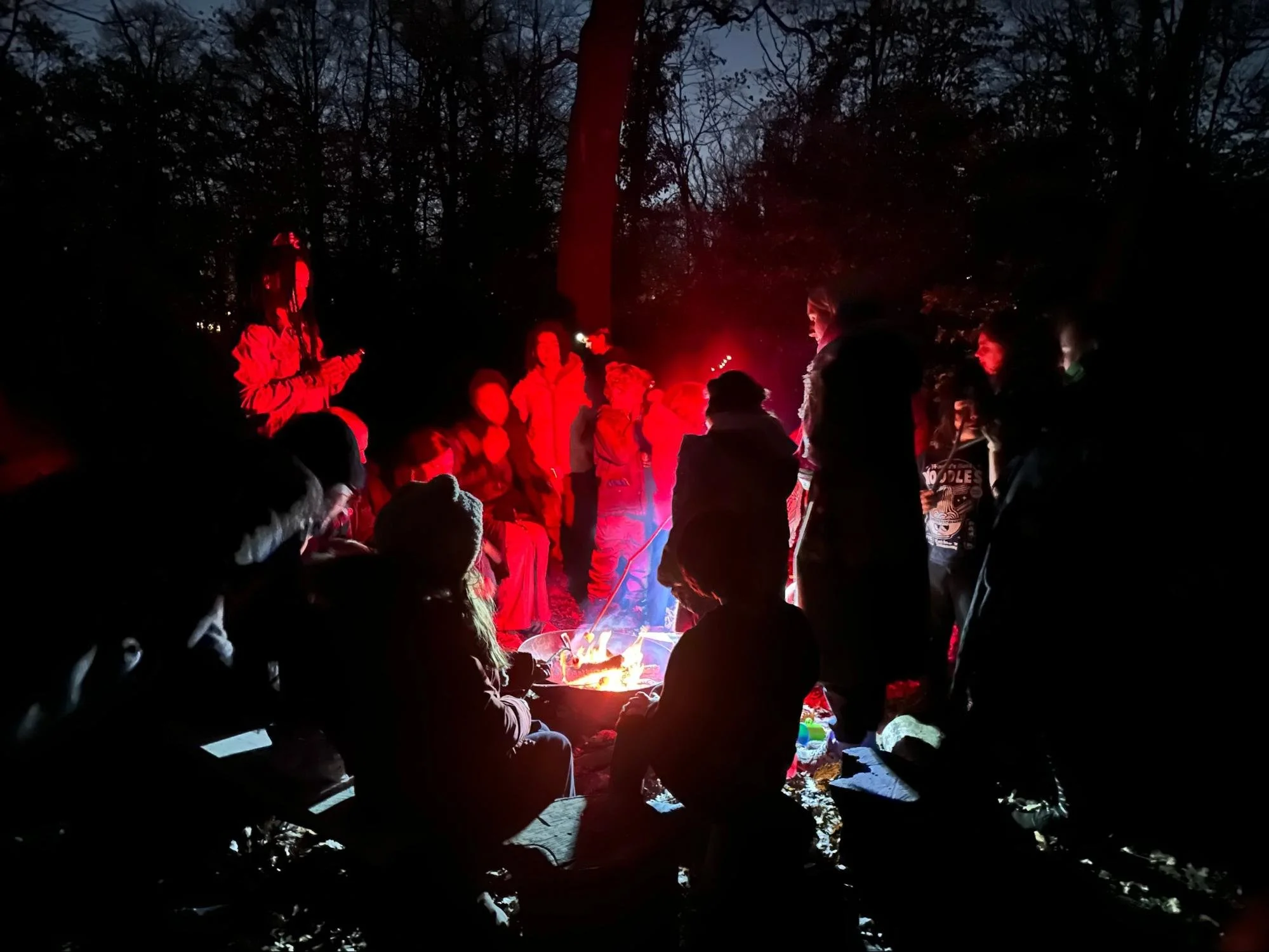
The fire of a gathering
There are four elements which make up our time at Free We Grow, and our hosting space feels very much like our fire. When visitors come, they bring with them passion, ideas, and they spark curiosities which can fuel us for weeks to come. Sometimes visits are fleeting, but we may remember them months or years later, and sometimes visits are prolonged, and set us in a rhythm and a pattern, like our cherished interns. This year our hosting space has been graced by visits from parents for the last 15 minutes of the day to read and tell stories before pick up. This tradition spawned when we realised that Sara would need to leave FWG just before 3pm to pick up her own daughter, Lila, from the New School. This conundrum was quickly conducive to a treasured space of tales, play, connection and surprises, as parents delicately chose stories and activities to share, from an exploration of walls, to a book that doesn’t want to be read! The space has also been part of our community wanting to actively bring in more culturally rich and diverse stories which can open up the children’s worlds.
Our hosting space has been running for years, and children are welcome to invite family members or friends to come and visit. Years ago, we also started a library of friends! A database of friends who would like to visit us, and give an offering. Perhaps they are great jugglers, or know how to build a brick wall, or are inquisitive chemists! Either way, when the time comes, and one of the kids expresses an interest out of our depths as facilitators, we consult our library and can invite guests to spend time with us and share their passions! This idea comes from an understanding that it takes a village to bring up a child, and that safe encounters with passionate adults from different walks of life, is part of a child’s natural curriculum. And this exchange is always mutual, our guests learn so much from the children and the woods. Just as children need adults in their lives, so too adults need children in their lives.
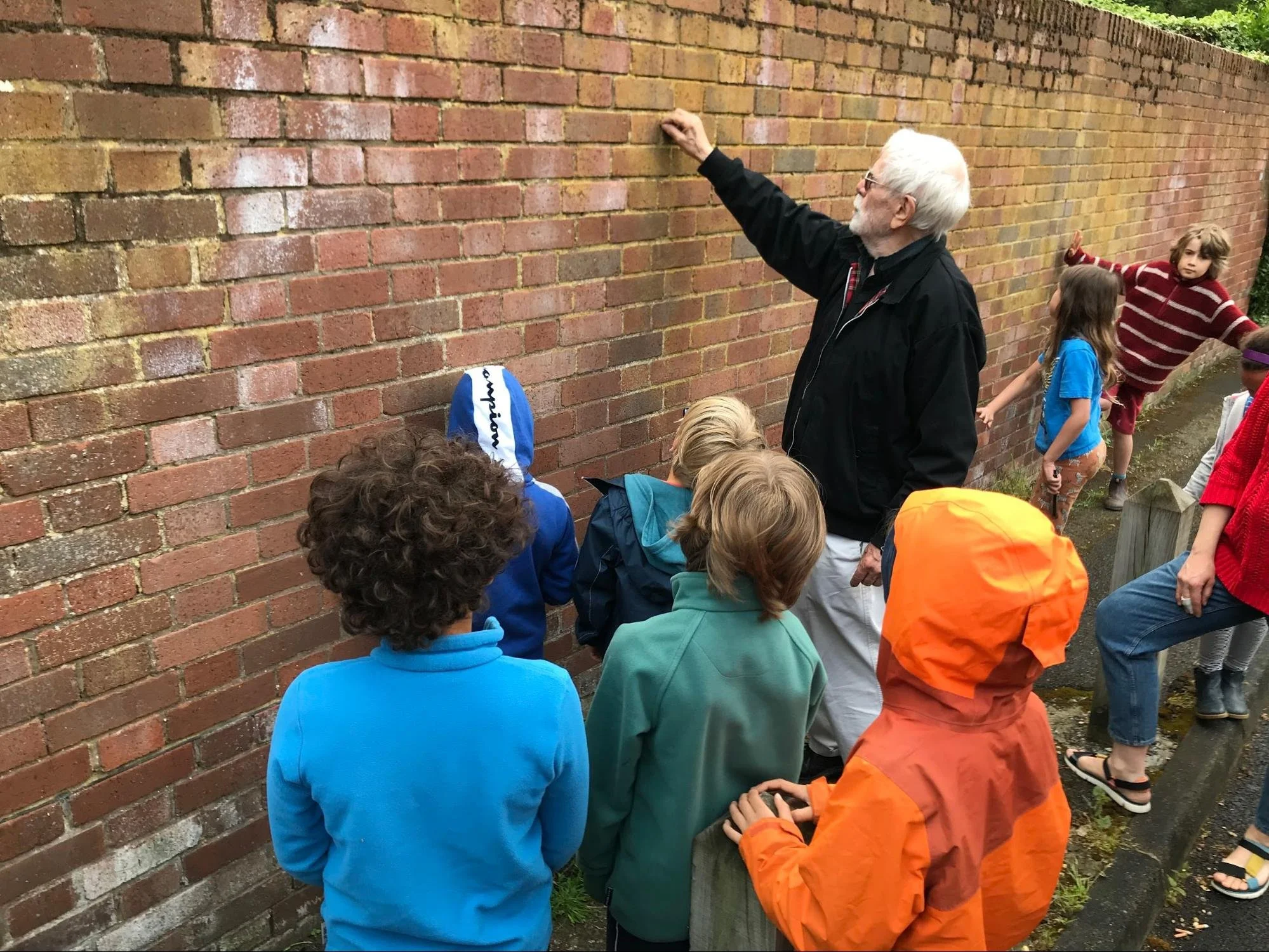
From the archives: The kids in 2018 got interested in building brick walls so one of the children's grandads, who'd built his own house in the 70s, came by to to share his stories of building and give them a tour of different styles of brickwork around the neighborhood and their structural properties
We have historically named our 4 spaces the hosting space, visiting space, home space and buzz space, our four spaces of engagement. This naming came about in a bit of a rush as we founded Free We Grow nearly 9 years ago, and seemed at the time a practical way to capture the concept. However, with the years, we’ve lived the four spaces, and it seems that each of them has its own characteristic, and as a whole, they complement each other. And so, it might be helpful to think of them as elements: without one, the rest would not feel complete.
A couple of weeks ago, we sat around our morning circle to agree on our forthcoming plans, and as has become customary this term, the children said they wanted to go out to play 4 square and other games after lunch. Soon there was a bit of a debate about where to go. Over the previous weeks, they had been flowing out of the gates of Free We Grow and like a bubbling brook, eddying down the local lanes to different playgrounds where they pool together to explore the edges and contours of the spaces, to fill them with their laughter and their play, and to interact with the other life forms out in the wild - pedestrians, cyclists, council workers, teenagers on their lunchbreaks from school.
Three potential pooling spots were named: Mayow Park, the playground across the road, and the New Playground. Each of these had pros and cons which the children know well. The distance it takes to get there, the amenities at the site, the roughness of the ground, and whether it takes well to wheels, and the stories of play which the spaces have invited in previous visits. Each of these characteristics were remembered and shared, until a proposal was made that everyone agreed to, to go to one site each day of that week. And so, as the weeks unravelled, at approximately noon, the children would gather like water droplets waiting to cascade out the gates after they recite the three rules to keep us safe outside, and they ripple, trickle and surge through the lanes to their chosen pool!
Once there, play percolates through the space, from the evident four square, to pear picking, tree climbing, new games inventing, skating, diabloing, meeting passers by, networking, litter picking, wheelieing, singing, and fetching rogue balls from neighbours’ yards!
Our second space of engagement, our visiting space is like water. Sometimes water needs to flow, and the boundaries of Dacres Wood are permeable. Because, at Free We Grow ‘we believe that the world is a fascinating place, and that if children and adults spend time in nature, within communities, in a supportive and trusting environment, they will grow to care for each other and the world around them’. Somehow, Leonardo having returned 4 years after leaving to build a bench to replace the old Snake bench which rotted away, is part of telling that story.
Our third element, and perhaps the most grounding, is our home space. We are incredibly fortunate as a community to have the privilege of living in a little pocket of wilderness in London, with pond and trees, ivy and bramble, smooth, scaly and furry creatures living alongside us, complete with a little home, our own den if you’d like, just big enough for our little posse of people to gather in, get cosy, and collect the things that we enjoy playing, making and learning with.
Our home, Dacres Wood, is where we can get in our flow of exploring, creating and imagining. It’s where we make deep friendships, where we hone our characters and find the edges of who we are, in all the skins that we wear and the decisions we make and contribute to, where we are fast enough to catch a leaf tumbling from a tree and slow enough to notice the seasons change as the first icicles appear on the surface of the pond. Where our feet can dip in water and our hands can mark the world with clay. When the world starts to feel all shaky and upside down, our home space is where we know how things work, and we know what to expect. Our regular routine of free and co-created time, nestled around our meetings and meals, and our end of day routine, create a structure around which our play and learning can take place with ease.
A home space, like the earth, can take some tending to, stewarding to help make it feel homely and safe. Even a fox who lives in the wild will position and fashion her den so that it’s fit for purpose. And just like the fox, in our home space, we are in a constant dance working out our agreements, shifting this stick, coming up with new rules, snuffling that leaf. This term, with such a small group, and new children joining and due to join, we took some time to review our old rule book, written with so much care by children and facilitators from generations past, which held the ground for everything from pokemon card trading to agreements on swearing. These agreements made sense at the time, just like a particular burrow might make sense for a certain family of foxes. But as the seasons change, the land shifts around us, and new creatures come to inhabit the space, new burrows need to be built and old ones refashioned, so that we continue to feel warm, safe and held in our earthly home space.
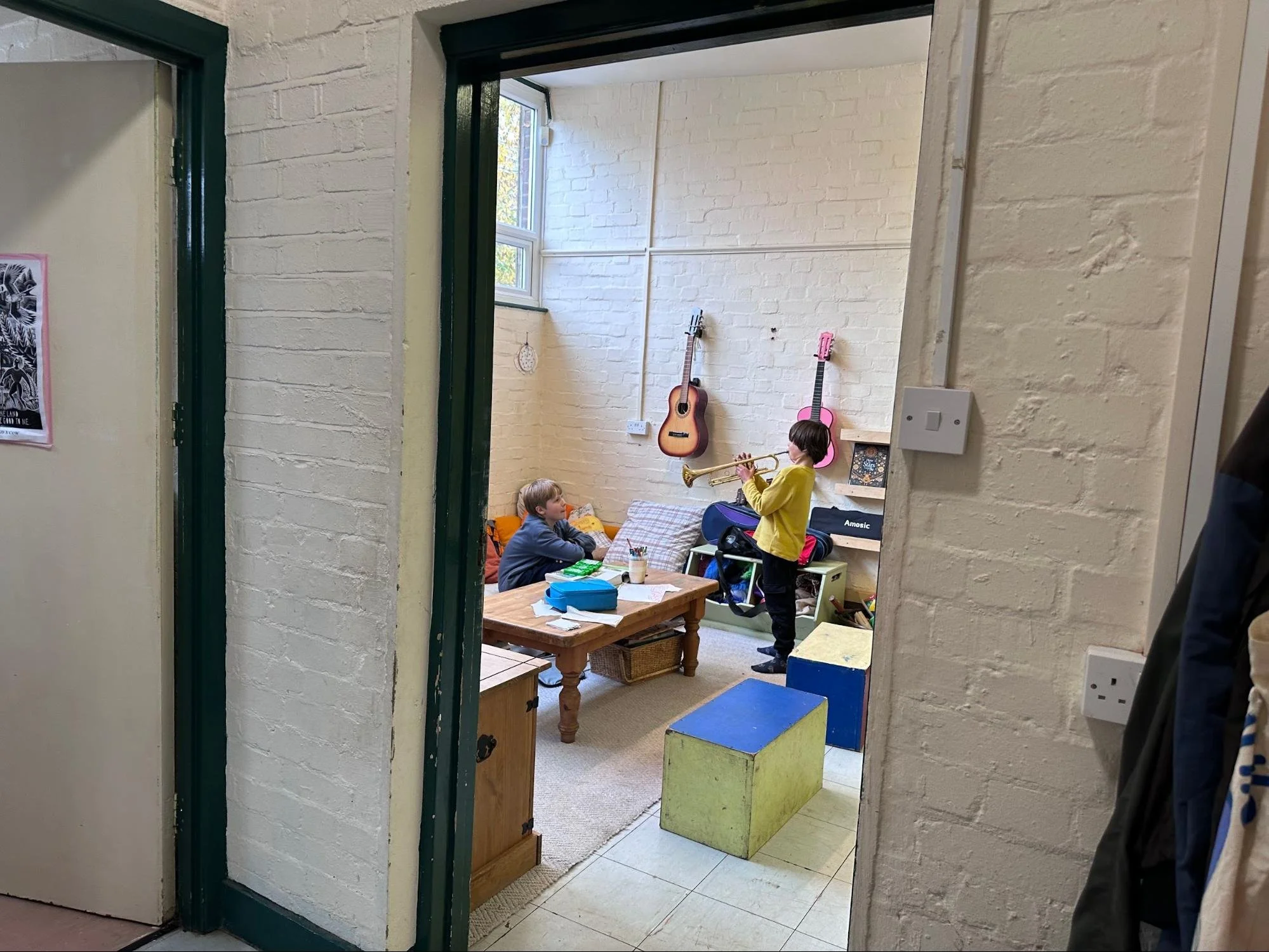
Our home space
It may seem, in the physical realm of things, that these three elements, our home space (earth), hosting space (fire), and visiting space (water), may cover our bases. And then a gust of wind blows and shakes us all up into a frenzy! And like a hive of bees, we get activated and agitated, and the wind swirls us into action as we zoom from one idea to the next, and eventually pull our forces together to make something grand happen! That process of going from scattered, incoherent, segregated beings, to a coherent, moving, creative force, is what we call our buzz space. We would not be complete without the air, the breeze that fills our sails!
There’s a word, shared with me by my friend and co-conspirator at the Freedom to Learn Network, Jen Nuin from eco-democratic learning community, Little Forest. The word is Hwyl, and is a Welsh word which means joy and passion. But the etymology of the word comes from sailing. It is about the physics and dynamics of the sail as it interacts with the air, water and the sailor. As Jen puts it, when you’re sailing, the piece of materials that makes the sail is just a piece of material, unless it’s in interaction with the wind. The sail is useless if you just have the sail and the wind, you need the sailor who holds the rudder, steering, and all three work together, all the dynamics interact. Hwyl is the course you navigate in your life and when your sail is full of wind, and you’re powering along and you’re going in the direction you want to head and, when there’s harmony between the sailor, the person, nature and the tool you have created to harness that power to go in the direction you want to head in your life and you’re experiencing joy and empowerment, that is hwyl.
Our buzz space, our air element, is our hwyl, and when our sail is full of air, sometimes it feels like all manner of adventures, exploits and creations can happen. And it’s not a boat with just one sailor, but with a whole team of us! Just this term we were riding the high winds, with the Vampire film coming together, the bird hide starting to take form, a panda party celebration to bid farewell to Riyoshi, and an end of term show complete with a play, a film screening, games and musical interludes!
It is true too, that just like the winds can blow up a storm, or send our kites flying, sometimes we can also find ourselves stuck in the doldrums. The doldrums are real in the grand scheme of things, and the rest of the wind’s pathways and patterns would not exist without them. And when that happens, it ain’t necessarily a time for hopelessness, but rather a time to stop, slow down, rest, take stock and get prepared for the next swirls of winds!
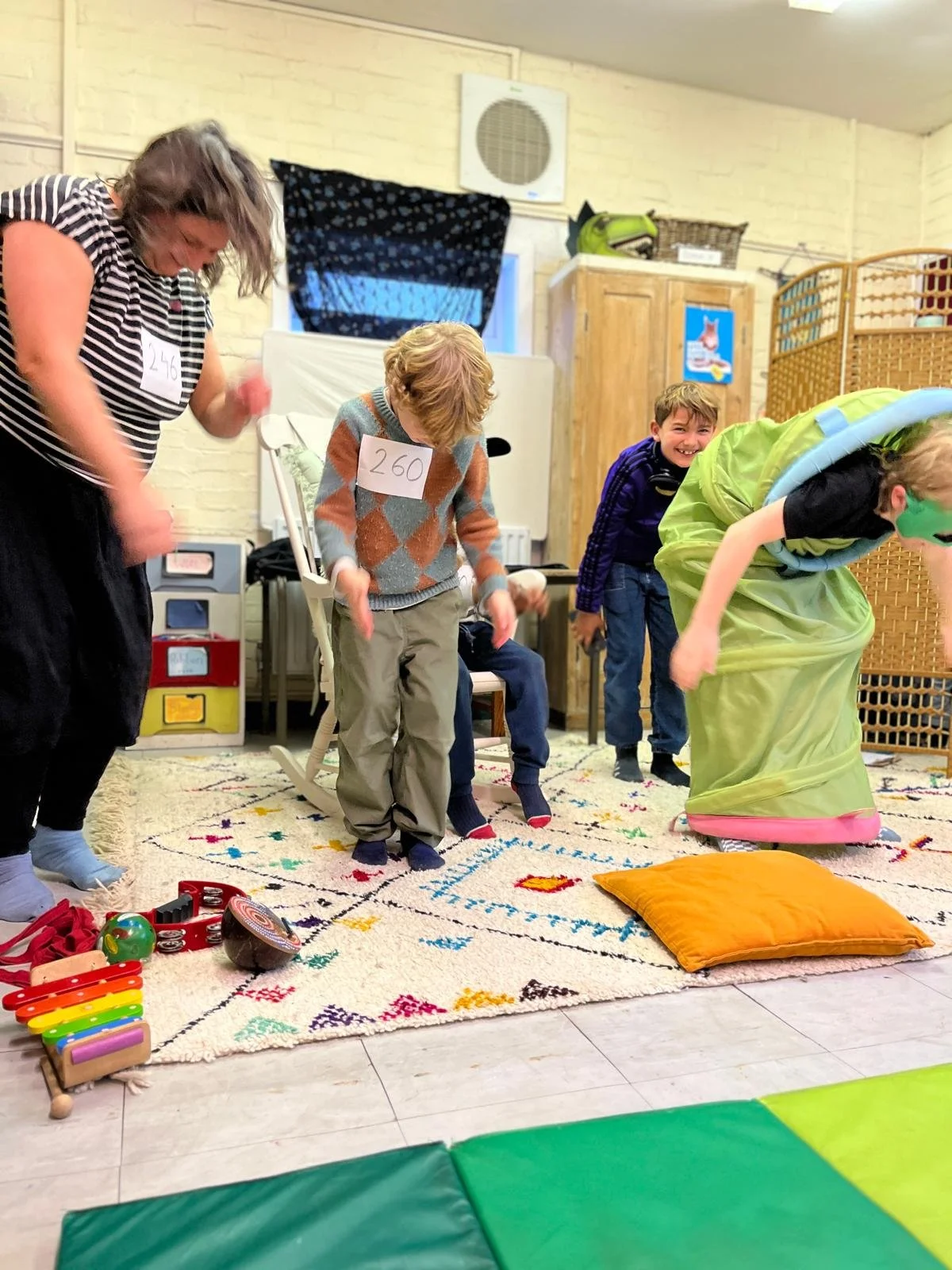
Taking a bow at the end of the 6/7 show
Coming back to FWG after a two year sabbatical I have come to appreciate even more fully how our four elements are one of the defining features which help to create a sense of wholeness for our community and a rich learning environment. It creates a kind of sphere that holds us as we engage and interact with each other and the world around us. As individual learners, and a community of learners, we are held within relationship to the world around us, the people, places, things and ideas that make it up.
It is a bit of a misnomer to call our setting a self-directed learning community, because in fact, it’s through our observations and interactions that we shape our understandings and desires. We do value, as paramount, the importance of children making decisions for themselves, and in this sense it is self directed. Because with each decision made, information is gathered, synthesised and acted upon, and an understanding of self and the world, and of agency, is exercised. But the nest in which this happens is not the individual body, but all four elements which are its building blocks. We experience the world with our senses. Our four elements are a way of recognising that, and knowing that it’s in engagement with the real world around us, sense making in relationship, that we may grow free, connected, and well.
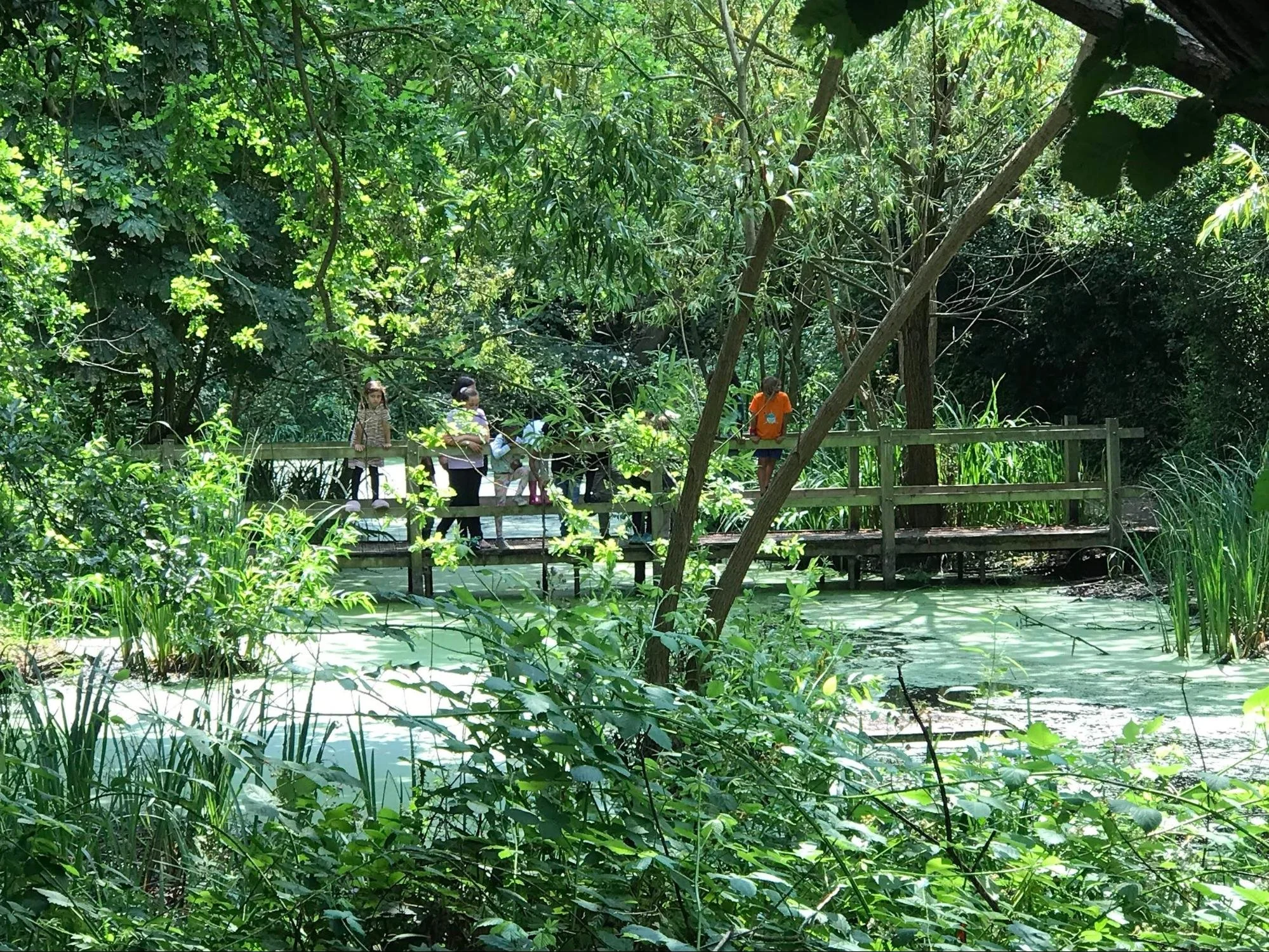
Taking in the elements at Dacres Wood